Search This Site

Thursday, October 24, 2013

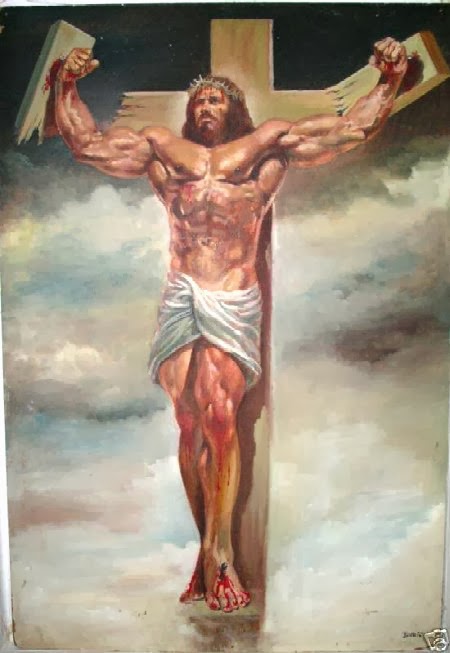
Mark Driscoll's Violent Jesus

After several verbal jabs and insults over the years, world famous pastor Mark Driscoll of Mars Hill has finally has brought forth an argument against Christian pacifism. Interestingly, he anchors his argument around the 6th command “Thou shall not murder.” The blog is titled Is God a pacifist? and you can find it on The Resurgence website.

I find three major issues with Driscoll’s blog. 1) He clings to the Moasica Law far too much for Christian ethics and 2) He poorly interprets the New Testament witness of Jesus so as to turn the Saviour into a vengeful and violent person, and 3) He isn't all that kind about the matter. But before I start let me just say that this guy (Derek Vreeland) said some really beautiful things about this and you should read his blog more than mine. 

1) Let's start by saying that Driscoll shows rightly than the wording of the sixth commandment is dealing with a specific type of killing; a murderous type. He is also right that the Mosaic Law in Exodus allows for lethal self defense and capital punishment within the Israelite community. He is also right that God allows his people to kill enemies in war at many points in the Old Testament. That’s all scripturally obvious and undeniable. So we agree that God throughout scripture is not properly labelled as a pacifist. 

However, Driscoll is arguing that the Mosaic Law is still the expectation for believers today. In answering the question “What does the sixth commandment mean for us?” he claims that killing a person is often justified and even necessary (the Exodus passages are his support). He claims that “God’s prohibition against murder in the sixth commandment is not intended to apply to lawful taking of life, such as self-defense, capital punishment, and just war.” While the sixth commandment is specific in forbidding murder, the Mosaic Law commands capital punishment and self defense, and God sends Israel to war in the Old Testament, that doesn’t mean God has the same expectations for us today. While we must look at the Old Testament along with the New Testament to get an accurate picture of God, we must also understand that God has continued to reveal himself, kingdom, and will for his people through time and thus there is progression in ethics for believers. The finest place to find expectations for believers today is in Jesus who is the fullest revelation of God because he is God.This makes the gospels useful since they record Jesus' teachings and example.

Jesus tells us that we were given the law (seen in Exodus) because of our hardness of heart (Matthew 19:8, Mark 10:5). We weren’t meant to always live that way but rather meant to be freed to live in a greater righteousness (Matthew 5:20) and that is why Jesus tightens the reigns on a lot of teachings like “love your enemies” and “thou shall not murder” (not only can we not murder someone, we can’t be angry at them). 

The Apostle Paul teaches that we are not held to the Mosaic law (especially us Gentiles) because Christ has freed us from it and called us instead to the law of love as exampled by Christ. We are not meant to function the way ancient Israel functioned in the time of Exodus but rather we are meant to function like Jesus when he walked the earth (Ephesians 5:1). This is the picture of the early church who suffered mistreatment and were said to be imitators of Christ (1 Thessalonians 1:6, 2:14, Hebrews 6:12)

Jesus, though not claiming to be what would later be called “pacifist”, lived a life of nonresistance and nonviolence. He taught people to do good to enemies, to bless and not curse, to turn the other cheek, to put away their swords, and to embrace forgiveness and mercy as they suffered and endured wrongdoing so that in doing so they might be perfect as their heavenly Father is perfect. Jesus told us that it is the peacemakers who will be called children of God. Then he allowed himself to be tortured and murdered unjustly, telling us to follow him with crosses on our back all the while. Maybe that’s not pacifism but sure it gives a lot less permission for violent and lethal action in the life of a believer than the Mosaic Law. Driscoll overlooks this migration from the Mosaic Law to the law of love.

2) Driscoll argues that the Prince of Peace is not a pacifist because he must "vanquish his enemies." The problem with this argument is that it must ignore the wisdom of scripture which shows that Jesus does overcome and defeat his enemies through his death on the cross and resurrection from the dead. The victory is secure already and it came through nonviolent means. Jesus becomes our sin, suffers our sin, and covers it by the cross and resurrection. In the same way he absorbs our violence through the cross and shows it lacking as he defeats our violent ways in the resurrection. In that line of thinking, is it any wonder that his last words to us are “Peace I leave with you; my peace I give to you. Not as the world gives do I give to you” (John14:27)?

The notion that Jesus can not be nonviolent because he must defeat his enemies implies that Jesus must employ violence to defeat his enemies but we know this is nonsensical in light of Jesus’ own words when he teaches, “My kingdom is not of this world. If my kingdom were of this world, my servants would have been fighting, that I might not be delivered over to the Jews. But my kingdom is not from the world” (John 18:36). And have we forgotten that Jesus could use all the force he wanted for his kingdom purposes but never did (Matthew 26:52-54)? Why would he when his/our enemy is not flesh and blood (Ephesians 6:2) and his/our weapons are not ones made by men (2 Corinthians 6:7)?

It seems that Driscoll is still promoting his notion that Jesus “Jesus took a beating to atone for sin; on his next trip he will hand them out to unrepentant sinners instead” (source) Driscoll has described his view of Jesus before stating in a 2007 Relevant magazine interview, “...I cannot worship a guy I can beat up.”*

He also stated that the book of Revelation chapter 19 shows that “Jesus is a pride fighter with a tattoo down his leg, a sword in his hand and the commitment to make someone bleed.” (source) This is not exactly accurate and it shows that Driscoll takes a strictly literal interpretation of Revelation, which most notable theologians would rightly dismiss.** A few key things to know about this passage is that the blood Jesus is soaked in is his own because he shows up drenched in it (remember the cross) and the sword comes from his mouth and is most likely imagery for the Word of God which brings judgment and defeats evil with truth. The language may be violent but the Jesus it describes is not. It's the same Jesus John earlier described in his gospel. If one of those descriptions is wrapped in imagery and is confusing then it is best to refer to the more clear description.

Driscoll’s view of a violent Jesus is restated in this new blog about pacifism. He writes, “[Jesus] has a long wick, but the anger of his wrath is burning. Once the wick is burned up, he is saddling up on a white horse and coming to slaughter his enemies and usher in his kingdom. Blood will flow.” The slaughtering Jesus that Driscoll desires isn’t the Jesus described in Revelation. 

Again, Driscoll misreads the scriptures of Revelation when he comments on Revelation 14. He attributes all the slaughtering to Jesus but really the passage is imagery of harvest. It’s farming/vineyard language and it resembles Jesus’ parable about the sheep and the goats (Matthew 25) or the wheat and chaff (Matthew 3:11-12). Driscoll misses that Jesus reaps only the good harvest and some other angel reaps the grapes for the winepress of God’s wrath. Also, the sickle is a farming tool and not a weapon (even in this passage). Driscoll wants Jesus to be the guy who hurts other people and brings about a river of blood but the scriptures don’t show that at all. Scripture shows a river of blood pouring from Jesus' hands, feet, side, and brow due to suffering the violence of evil men. The man Driscoll describes wasn’t on the cross but was the one that put the man on the cross. That's scary.


3) The absolute worst part of this blog is not the poor reading of Revelation or the lack of Gospel and Epistle passages*** from a man who is calling out pacifists for being selective in their use of scripture to support their position. The worst part is Driscoll’s inability to speak on the subject of Christian pacifism without insulting his brothers and sisters in Christ who live a lifestyle of nonviolence. Not only this, he can’t avoid insulting their attempt to worship Jesus. Even if we agree with Driscoll’s face-value interpretation of scripture we should disagree with his treatment of others (because it is completely unfaithful to Jesus’ way - pacifist or not).

Driscoll describes the Jesus worshipped by pacifists as “The European, long-haired, dress-wearing, hippie [created by]..a bad artist who mistook Jesus for a community college humanities professor.” This, of course, is an uncivil and unloving attempt at describing the pacifist position. Driscoll shows no intention to accurately represent those with whom he has disagreement. He chooses to insult them and attempt to shame them in Christian circles with this statement. He’s done this in the past when he stated in his blog championing MMA, “Their picture of Jesus is basically a guy in a dress with fabulous long hair, drinking decaf and in touch with his feelings, who would never hurt anyone.” A poor argument is often proved by attacking language. 

Driscoll ends his blog stating, "Some of those whose blood will flow... will be those who did not repent of their sin but did wrongly teach that Jesus was a pacifist. Jesus is no one to mess with." The implication is the threat that Jesus is coming to slaughter the pacifists in his wrath because they taught that Jesus promoted a lifestyle of nonviolence and they discouraged killing other people. 

Nevermind the fact that Jesus never did hurt anyone according to scripture, Driscoll's demands a violent Jesus. Even if Jesus isn’t a pacifist Driscoll is still wrong in how he treats his Christian brothers and sisters (and it is probably because he does a poor job of reading the scriptures in a coherent fashion). I'm not saying God doesn't have a wrath and that those choosing sin won't suffer it. I'm not saying God is unjust and that there is no condemnation for sin. That's what makes God's grace seen in Jesus so beautiful! I'm saying we need to rethink Driscoll's presentation of Jesus because it doesn't seem to match up with the full presentation in the New Testament.

As we all seek to know Jesus rightly, may we approach the entire scriptures with open hearts and minds. May we believe what Jesus has said as the ultimate truth and let his words and example guide us into his already ushered in kingdom. Even if Jesus doesn't turn us into pacifists, may he turn us into people who love everyone with the fruit of the Spirit, regardless of how weak or strong they may appear.  


*This is ironic since Driscoll (along with every other human being in history) did beat up Jesus and then killed him. And in the midst of it Jesus forgave him (and everyone else) before giving them peace and calling them to follow his way. 
**Driscoll shows these interpretation colors in his MMA Evaluation blog as well when he states, “Jesus said both to turn the other cheek and to bring a sword to defend oneself. So let’s not simply quote one thing he said as if it were the only thing he said.” Jesus said that first part but never the second. That’s a message Driscoll believes in implied by a command of Jesus that most scholars would say is metaphorical (and even promotes the teaching of nonviolence).
***Driscoll only references the gospels to point out a quoting of the sixth commandment (perhaps to suggest that the commandment is still in effect). The problem with this is that in those passages Jesus is explicitly saying that that teaching is not the ethical expectation for his followers but rather he calls them to an abandonment of simple anger or to move beyond law into relationship and sacrifice. The only Epistle references are to Romans 13 which is used in a way that dismisses Romans 12 and shirks the place of the sixth commandment in the life of a post-resurrection believer.

Friday, August 23, 2013

Christians Condemning Sinners


My previous post about the The Gospel Coalition’s “Gag Reflex” article has brought about some disagreement (not unexpectedly). I’m not going to defend against most of the arguments here but I will speak to one of the themes I saw in the feedback I received. One of the most interesting aspects of the disagreements is that the majority of the people who disagreed with me were fighting for the need to condemn others for their sin. Some felt that we need to temper love with condemnation. Others said we need to outright condemn in order to honor God. 

As a result I thought it would be helpful to look at the gospels and see what Jesus has to say about condemning sin and sinners (which describes us all). 

John 3:17-18 states, “For God did not send his Son into the world to condemn the world, but in order that the world might be saved through him. Whoever believes in him is not condemned, but whoever does not believe is condemned already, because he has not believed in the name of the only Son of God.” 

These words, along with several other NT passages (Galatians 2:11, 2 Thessalonians 2:12, 1 Timothy 3:6, 5:12, Titus 3:11) teach that people are presently living in condemnation and the future condemnation that comes upon them is of their own doing. Jesus, who is God in the flesh with us, does not come to us to condemn us for our sin but rather to do the exact opposite. He comes to save us from our condemnation and sin. None of these teachings give us the idea that we, as Christians, are to condemn others (especially if we are to imitate Jesus in as much as we are able). The condemned are already condemned. We can correct and we can love but we can not condemn unless we also desire to be condemned. 

In Luke 6:37-38 Jesus says, “Judge not, and you will not be judged; condemn not, and you will not be condemned; forgive, and you will be forgiven; give, and it will be given to you. Good measure, pressed down, shaken together, running over, will be put into your lap. For with the measure you use it will be measured back to you.” 

We have a choice to condemn others, of course, but it is not a choice that will result in blessings. The contrast of judgement and condemnation with forgiveness and generosity in this teaching is strong and serves to show that we are to approach others with forgiveness and generosity (which is Christ-like love) instead of condemnation. That is fighting for the sinner instead of fighting against the sinner. If Christ died for us while we still against him by living in sin and if we are to imitate Christ then we must fight for the sinner and not against the sinner. But knowing what that looks like can be hard. 

There is an example of this in John 8:2-11: “Early in the morning he came again to the temple. All the people came to him, and he sat down and taught them. The scribes and the Pharisees brought a woman who had been caught in adultery, and placing her in the midst they said to him, “Teacher, this woman has been caught in the act of adultery. Now in the Law Moses commanded us to stone such women. So what do you say?” This they said to test him, that they might have some charge to bring against him. Jesus bent down and wrote with his finger on the ground. And as they continued to ask him, he stood up and said to them, “Let him who is without sin among you be the first to throw a stone at her.” And once more he bent down and wrote on the ground. But when they heard it, they went away one by one, beginning with the older ones, and Jesus was left alone with the woman standing before him. Jesus stood up and said to her, “Woman, where are they? Has no one condemned you?” She said, “No one, Lord.” And Jesus said, “Neither do I condemn you; go, and from now on sin no more”

As John said five chapters earlier, Jesus does not come to condemn but to save. He brings forgiveness and generosity to the sinner (and as this passage proves we are all sinners). It is then no wonder that when Jesus encounters the adulterous woman and the religious mob that he makes it absolutely clear that nobody but Jesus himself is free to condemn sinners. In doing this he points out that all people are sinners. This includes the people who are believed to be the most righteous. Then, he refuses to condemn anyone when he has all authority to do so. Instead, he forgives the adulterous woman and calls her to repent as she lives her life in freedom.

That is forgiveness and generosity. That is love. That is what we Christians must be about. If we are eager to condemn or to be against people, to prove them wrong or disgusting then we’ve missed Jesus. As we are honest and bold in speech about the evil of this world and the sin that kills humanity let us do so without condemnation but rather with forgiveness and generosity. We can’t pussy-foot around the reality of sin, that would be unloving to both God and neighbor. However, Jesus shows us there is a way to address sin without condemning others. After all, if someone is in sin they are already condemned so our condemnation doesn’t help them. However, our forgiveness, generosity, and honest speech help. 

May God’s Spirit give us discernment to know what is good and what is harmful. May we see love rightly defined through Jesus and follow him into love so that we and others may find freedom and true repentance. May we learn to stand against sin as Jesus does through love and not condemnation.

Thursday, August 22, 2013

The Gospel Coalition's Gagging Reflex


I was told this morning that The Gospel Coalition is once again under some attack for a blog they posted entitled The Importance of Your Gag Reflex When Discussing Homosexuality and “Gay Marriage” by Thabiti Anyabwile. I read the article and I had several thoughts but when I finished writing my reaction I discovered a better thought.

Anyabwile wrote, that Christians in the gay-marriage debate must “Return the discussion to sexual behavior in all its yuckiest gag-inducing truth.” In an attempt to show what Anyabwile calls the “yuck factor” he describes homosexual acts. He then states, “That sense of moral outrage you’re now likely feeling–either at the descriptions above or at me for writing them–that gut-wrenching, jaw-clenching, hand-over-your-mouth, ‘I feel dirty’ moral outrage is the gag reflex. It’s what you quietly felt when you read “two men deep kissing” in the second paragraph. Your moral sensibilities have been provoked–and rightly so. That reflex triggered by an accurate description of homosexual behavior will be the beginning of the recovery of moral sense and sensibility when it comes to the so-called ‘gay marriage’ debate.”

Here is what I think:

The idea that we will make progress in reestablishing moral sensibilities through the development of reactions of disgust towards certain sexual acts is misguided and shortsighted. People who are easily grossed-out aren’t bound to be morally upstanding people. They may be sensitive (possibly even hypersensitive) to sinful acts but that doesn’t make them necessarily upstanding or send them on the path towards being morally upstanding. Weren’t the Pharisee’s disgusted when they encountered Jesus breaking the Mosaic Law or when they found a woman committing adultery? What good did it do them? And in contrast, how good was it for the Pharisee’s and the sinners to encounter the person of Jesus?

What we need is not to see certain sexual acts as “yucky” but rather to see sinful people as similar to us. We must learn to see others as God sees them and created them. Ultimately, this begins with us seeing ourselves as sinful (and whether or not our sin is “yucky” or not is relative).

This means we embrace the knowledge that all humans, gay and straight alike, chaste and promiscuous alike, are created in the very image of God. It means we acknowledge that we are ourselves sinners in need of the Father, Son, and Spirit. We focus on the log in our own eye so that we may be of assistance to those who have specks in their eye (something done delicately). My sin is a bigger issue than someone else’s sin and my fight against sin is within myself.

Our focus must always be on loving people because that is the command Jesus gave us. He told us to give up our own sinful ways and to love others. He didn’t tell us we need to see sinful acts as more disgusting, create a morally sensible population, or to win political debates. His focus isn’t on those things. So why is ours? Jesus tells us that his kingdom is subversive. It does not flourish by winning political quarrels or by the establishment of laws that suit the opinions of his people. More often his kingdom is found in the suffering of his people. Maybe we see the kingdom more when we are busy being with people instead of being busy being against people.

If we will faithfully read the words of Jesus in the gospels, I guarantee that we will not be focused on convincing others that homosexual acts are disgusting so that we can recover “moral sense and sensibilities” and as a result win a political or moral debate about gay-marriage. Rather, we will be focused on following Jesus into his upside down kingdom as humble people who fight sin in their own hearts and honor others in a way that makes them see the beauty and goodness of God and his Way so that they desire to also follow him.

I’m not saying we don’t call sin out for what it is. I’m not saying homosexual acts aren’t sinful. Scripture teaches that they are indeed sinful. But that doesn’t mean I should fight to be disgusted by other people’s sin or fight for other’s to be disgusted by other people’s sin. It means I should avoid that sin in my own life and be unafraid to call it sin when necessary as I deeply love others, no matter what sins they commit. 

If I’m disgusted or not doesn’t matter. What matters is if I am pure and loving in Christ Jesus. So perhaps the better aim and strategy is to love God and to love neighbors as ourselves. This means we talk less about homosexuals and talk more with homosexuals, and not about their sexuality but about everything in love. Less debate, more life. Eventually our focus won’t even be about homosexuals but rather about people. Let’s face it, people don’t want to be labels and projects anyway. People want to be embraced as people through love.

Thursday, June 20, 2013

A Tempted God

I've had Muslim friends tell me that James 1:13 proves Jesus is not God because Jesus was tempted by Satan in the wilderness (Matthew 4:1-11) and Jesus' temptation contradicts James' words. If God can not be tempted then how can a being that was clearly tempted be God? It's a good question and the answer is within the story of Jesus and within this very portion of scripture itself. Beyond that, we not only discover how Jesus is God from this but we discover how good Jesus/God is and how good of news this ends up being for us.

James 1:12-15 states,

Blessed is the man who remains steadfast under trial, for when he has stood the test he will receive the crown of life, which God has promised to those who love him. Let no one say when he is tempted, “I am being tempted by God,” for God cannot be tempted with evil, and he himself tempts no one. But each person is tempted when he is lured and enticed by his own desire. Then desire when it has conceived gives birth to sin, and sin when it is fully grown brings forth death.

At first read we may instantly think this passage says that the enemy can not bring a temptation to God. That is, God can not be approached by a single temptation; he is beyond that possibility. Such an interaction, the approach of evil towards him, is impossible. Unlike Cain, sin can not crouch at God's doorstep. This is both true and untrue. 

I've come to learn that James is saying that God can not be overcome by temptation and not that an enemy can not try to bring evil to God's feet. This is a much stronger God than the God who can not be tempted. A God who can be approached by evil but never defeated by evil gives me more confidence than a God who can't be approached by evil. That's a great power to be so removed from the approach of evil suggestions, I guess, but it's not a great strength. A God who is tempted and victorious seems stronger and more able to deliver in love than a God who is far off from evil's advances. The God that is too powerful or high up for evil to try and speak to is a God that would also probably be distant from me and my evil

However, the story of Jesus (and the entire Biblical story) tells us that this is not the way God operates. The Triune God of the scriptures has always been a God that comes to humanity and interacts with sinfulness. God does not sin but he loves those who do sin and rescues them from the clutches of evil. The world was overtaken by sin and God was not satisfied with letting evil win.

Our God jumps into evil's realm and defeats it. That speaks volumes to the greatness of God's power and love. Much more preferable than the God who is simply far off from sin I'd say. Jesus in God incarnated. That means God himself came to earth in the person of Jesus to correct what was made wrong in the world by sin. He came near. He is God With Us (this is what Emmanuel means). Jesus came to earth and was tempted by the Satan but he was not overcome, he overcame. Then he went to the cross and overcome death and the power of sin which put him on the cross (along with his unwillingness to sin himself). His strength in faithfulness allowed him to be tempted, beat down, buried, and then victorious. So in a sense, God can be tempted. Temptation from outside sources such as the Satan can approach God is Jesus Christ, but it can not defeat him. 

In another (perhaps greater) sense, God truly can not be tempted. Reading forward into the next verses, we learn that James is more referring to our own evil desires and that we are tempted by our desires (this is a part of our fallen nature). Our desires are compromised (due to influence of the enemy and the world that raises us predominantly). But God is not fallen because he never sinned like humans did. He has never broken relationship but rather has always stayed faithful. 

God is faithful and thus he can not be overcome or tempted by his own desires because his desires are wholly good. This is why Jesus can overcome the temptations of Satan. His character and desires are wholly good. They are strong, resilient, perfect. Jesus lacks nothing. In the previous verses we learn that steadfastness (the nonabandonment of commitment) proves a lacking of nothing, a perfection. Jesus has this steadfastness unlike anyone else due to his sinlessness. The Triune God is sinless and wholly good, perfect, lacking nothing.  

We must remember that Jesus, being God, is not tempted by his own desires in the wilderness. He is tempted by the enemy, an outside source, and he wins out. The enemy appeals to Jesus' desires but finds out quickly that Jesus' desires are not compromised and will not betray him. Jesus was tempted but not by his desires and thus he is still able to be God and we find that the account in Matthew does not contradict James' teaching. As a side-note, it should bring us great comfort to know that Jesus endured trials and temptations of all kinds (Hebrews 2:18, 4:15) and that as a result he can identify with us and the world we live in. He overcame where we have not and this gives us reason to trust him and accept his rescuing help.

As a result, God's desires can not turn against him and tempt him to perform evil. It is impossible for the perfectly good to be anything but good. A grape that can never dry or age will never be a raisin. So it is with God's desires. They will never be his enemy as our desires can be our enemies. Our desires can be compromised due to sin's influence but God is safe from this due to who he has chosen to be, due to who he is. In that sense, God can never be tempted. And because God is wholly good and is full of love he never tempts anyone else. He can not lead us into evil because of his goodness. Surely, though, he can lead us out of our evil.

So we pray to God that he would "not lead us into temptation but deliver us from evil" for the power and the glory and the kingdom are his. As we pray this we must take an honest look at our life and ask God to help us see what our desires are pulling us toward. Do our desires pull us into healthy and loving relationships that honor and build up others or do they lead us to feed our own greeds and leave others alone and unloved? Do we do what makes us feel good at the expense of someone else or despite the fact that we know doing this won't be beneficial in the long run?

Our desires are compromised. They can lead us astray. We want goodness, all of us, but sometimes we believe lies about goodness and trust our desires to be pure and to lead us into goodness when in reality we need to be discerning about our desires. Let us acknowledge we're influenced by evil and that we need the God who is not compromised and who overcomes evil and all it's wiles to guide us. Let us walk with the God who is safe from temptation and delivers us from evil while he, in Jesus, calls us to a stronger and more steadfast love for others as we abandon our compromised desires.

"To pursue goodness rather than merely our own interests is to transcend ourselves and thereby be more authentically who we truly are." -Miroslav Volf

Friday, May 3, 2013

Men Are More Important Than Women

I'm on a Mark Driscoll kick this week. I'm watching his sermons, I'm reading his blogs, I'm paying attention to my brother. His latest Sermon is on Ephesians 6:1-4 and is entitled "I Am Fathered." It's a part of his sermon series entitled Ephesians; Finding Your True Identity in Christ which is based off his latest book Who Do You Think You Are? (though this is not a chapter in his book like the other sermons in this series).

One of my ("open-handed" or secondary) theological disputes with Driscoll is his complementarian stance. I find it to be potentially damaging to the body of Christ (especially his personally stance). Despite the fact that he has emphatically claimed that his stance is not one that places different value on men or women, I have a difficulty buying the argument. I don't see how what they call an issue of "function" and  "role" isn't simultaneously one of "class" and "value" when discussing nonbiological characteristics. That's a big discussion that has a lot of complicated aspects to it and I won't open that can of worms too much today. Just a little.

Before I get into my disagreements let me make a few positive statements. At the start (and end) of the day, Mark Driscoll and I are brothers in Christ. I'm thankful for his boldness and his theological mind. I'm thankful that many have been blessed through being a part of Mars Hills and that Christ works through that network of congregations. While I have my own issues with Driscoll I respect him. I agree that men in our society, even in the church, have been growing more and more irresponsible in the last few decades and that the Church ought to be the society in which men treat women well by treating them as sisters in Christ. In the Church we should see men staying faithful in the covenant of marriage, refraining from sexual activity outside that covenant, and being responsible in every imaginable way to their children when God blesses them with those children. Fatherhood must be discussed. There is a terrible epidemic of fatherless homes in our land and we should not foster fatherless homes in the Church. I agree with Driscoll in all of this and am thankful he faces the issue head-on with sincere passion for justice. With that stated, I have some thoughts on the sermon.

At the beginning of this sermon Driscoll opens the teaching by stating, "The most important person in your entire life is your father." Apparently Driscoll agrees with me now. Let me explain.

We can't say men and women are of equal value and merely of different function if we say that one role/function that only men can fulfill is more important than any other function or role that only women can fill. That is, if we say fathers are more important than mothers then we immediately place more value upon fathers than mothers and thus more value on men than women. The child with a single father is immediately better off than the child with a single mother. 

The use of the word "important" creates a value statement. Important and valuable are often synonyms. If I say something is the most important thing to know then I say it is the most valuable thing to know. If I tell you a father is more important than a mother than I say a father is more valuable than a mother. One role is more valuable than the other. And since only a man can be a father and a woman a mother it follows that men can be more valuable than women. In the family, a woman can never be more valuable than a man because 1 man will always be the most important, the most valuable.

Driscoll's statement goes completely against his views on complementarianism and proves his views to be inconsistent (but who doesn't have inconsistent views). Driscoll is here saying that the two are different and not equal which is contrary to the popular complementarian view (the one he holds and preaches) that states men and women are equal in value but different in role and function.  This statements shows what is often called a strong "patriarchal" view. 

We could go in circles about how roles are given value and who places importance or value upon roles in our lives (do I put value into roles of people in my life, do they, does God, does the social sphere somehow do it itself, etc.) but let it be sufficient to say that Driscoll is claiming an absolute truth. For our purposes, let's point to God as the one who makes fathers the most important person in our lives. I think Driscoll would do this and claim the level of value attributed to the role of father is one established by God.

Driscoll states that the father is the most important person in our lives because "He has more power than anyone to influence you for good or for evil." How has this been proven? How do we see this in scripture? Sure, the Bible is written within patriarchal societies but the scriptures don't seem to consistently promote a patriarchal view (for an in-depth explanation of this see William Webb's Slaves, Women & Homosexuals) that gives this type of power to fathers above all others. The Bible never states or implies that fathers are meant to be regarded as more important than mothers or that fathers have the most influence for good and evil in our lives. 

This also begs the questions 1) If the father has the most power to influence a child towards good or evil then why does Driscoll find stay-at-home fathers (by choice) to need church discipline? 2) If this is true of fathers then why ought the mother stay at home to raise kids when they are young? Isn't this wasting the father's potential?" This is a confusion I have. But we must truly ask if fathers really have this power of influence.

Yes, the Proverbs often are framed as a father teaching his son the ways of wisdom (which is female and Christ at the same time by the way) but this influence is accredited to God, our heavenly Father. Influence is also accredited to the Satan. This is first seen in Genesis 3 where the serpent (representing the Satan) deceives and manipulates the man and woman into sinning. They had no earthly fathers. The influence of good and evil is not rested upon humans (alone). When it is, it's from a peer. From the very beginning of scripture's story we see influence for doing good and evil as coming from nonhuman sources. This is why we go to God asking for wisdom (James 1:5). 

In giving Driscoll the benefit of the doubt, we should assume he meant to communicate that the most influential human in our lives is always our father. However, even this stance wouldn't be supported by scripture. 

Do people influence one another? Absolutely! That's undeniable. The Bible indicates that we are greatly influenced by those who surround us socially (again, in Genesis it is a peer that brings human influence). That is why we are not to keep company with those who invest in evil deeds and are of sinful character (1 Corinthians 15:33). We are influenced to do good and evil by all those in our social sphere.

Matthew 27:20 shows that our religious leaders have great influence on us. Our religious leaders influence us so much that they can help lead us into life (as we see in the Apostles) or into sin and corruption (as we see in this Matthew passage). This is part of why I wrote my previous blog about Driscoll. The Proverbs prove that seductive women influence men far too often. This passage shows that the way in which a father treats his child affects the child (as is true with any two people, especially when a power dynamic is involved) but never in any of these passages are we told that one role, one person, is more influential than all the others in leading a person to good or evil. 

The problem with Driscoll's statements is that it demands that a single mother can never be as important to her child nor have more power to influence her child towards good or evil than that child's father, even when absent. However, a story in scripture shows us a time when a mother influenced her son in a terrible way. In Genesis 27 we see Rebekah influencing her son Jacob to fool his father and steal his brother's blessing, despite the fact that Jacob knew his righteous father would not have approved (obviously). In this story the mother had far more power than the father to influence a child and the father was present! Driscoll's statements completely go against scripture on this one. 

So yes, fathers need to step up because they are important and affect and influence the lives of their offspring. However, don't be fooled into thinking your father is the most important person in your life because then you admit your mother is not as important to you as your father and I don't see that going over too well (because who wants to be told "you're less valuable to me"). While the role of the father is incredibly important, fathers need to remember that they are not guaranteed to be  the most important person in the lives of their children (even if absent). Plenty of psychology and sociology textbooks will confirm this.

We must admit that the scripture does not supply us with a teaching that allows us to conclude that the earthly father is the most influential person in our lives. That's not at all a guarantee. Are we affected by the presence and/or absence of our fathers? Yes. But this is also true of mothers and friends. Ultimately, humans are easily influenced creatures and they will be influenced by anything and anyone that speaks to them. 

The question is if we will listen to God above all others and allow him to influence us the most and if we will choose healthy and wise social circles that bring us and others closer to God. To me, it seems that if we are going to place importance on people and give them value then we should always view others as greater than ourselves. The most important person in my life is my neighbor in this moment. Seek God and love neighbor. Rest in that, whoever and whatever your father is.